Testing your app is an important part of the app building process. It helps ensure everything works as expected before your app is accessed by users. This article explains how to preview and test your app using Fliplet Studio, including the New Tab Preview feature, and outlines recommended testing workflows before publishing.
Get started
- Preview your app in Studio
- Share a preview link
- Invite collaborators to test
- Test security and app behavior
- Test on devices and browsers
- Publish your app safely
Step 1 – Preview your app in Studio
Fliplet Studio provides multiple ways to preview your app while you are building it.
- Open your app in Fliplet Studio
- Use the Preview button to open the in-Studio preview
- Select the New Tab Preview icon located to the right of the Preview button to open your app in a full-screen browser tab
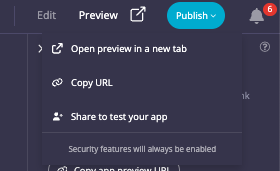
When using the New Tab Preview, app security is always enabled. This preview simulates the live environment, even if security is disabled inside the Studio preview window.
Step 2 – Share a preview link
You can share a preview of your app with colleagues without publishing it.
- Open the Preview menu in Fliplet Studio
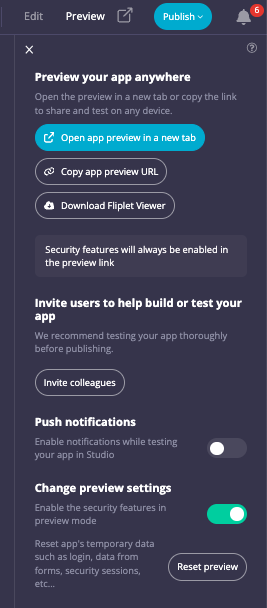
- Select Copy URL or click the Open in new tab button direclty to open up the preview
- Share the generated preview link with your collaborators
Note: The preview URL is not public. Anyone using this link must have a Fliplet Studio account, be logged in, and be added to the app as a collaborator. If the link is opened in an incognito or private browser window, the user will be redirected to the Fliplet Studio login screen.
Step 3 – Invite collaborators to test
To allow other users to access your app preview, you must invite them as collaborators.
- Open the Preview menu
- Select Invite users to help you build or test your app
- On the Manage Collaborators screen, enter the email address of the user you want to invite
Once added, collaborators can access the preview link and help test the app.
Step 4 – Test security and app behavior
All apps should be tested before publishing and after any changes are made.
- After making changes in Fliplet Studio, preview the app before publishing
- Test using the New Tab Preview to ensure security rules are applied
- Use the reset preview option to clear logins and test as a new user
Testing with security enabled helps confirm that users can only access the screens and data intended for them.
Step 5 – Test on devices and browsers
For apps that will be used on web and mobile, testing should be carried out across different platforms.
- Test on supported web browsers such as Chrome and Edge
- Test on iOS and Android devices
- Use Fliplet Viewer to test native functionality on physical devices when required
You should test changes such as new features, adding or removing screens, altering key links, modifying security rules, and updating data structures.
The following changes go live immediately and do not require publishing:
- Adding or removing records in a data source without changing its structure
- Most data source updates, which are retrieved automatically by components
- Components that retrieve data from external sources, such as RSS feeds or login services
Step 6 – Publish your app safely
Only publish your app once testing has been completed and approved.
- Notify colleagues involved in the project before publishing
- Publish only when you have time to review the update immediately
- Review the live app on mobile and web after publishing
- Confirm with colleagues that they have received the update successfully
The best practice is to avoid publishing your app solely for testing purposes. Use preview options instead whenever possible.
Related Articles
- App Maintenance Recommendations
- Screen Security
- How to test security for your app
- How to invite users to test your app